Case Study
Hotel Pauwa Website ReDesign

About Hotel Pauwa
Hotel Pauwa is a growing chain of luxury hotels in Nepal that blends modern comfort with traditional Nepalese culture and hospitality. With multiple branches across the country—including Kathmandu, Pokhara, Butwal, and other key destinations—Hotel Pauwa offers a consistent experience rooted in warm service, cultural ambiance, and refined amenities. Positioned near significant landmarks like Pashupatinath Temple and Fewa Lake, the brand caters to both domestic and international travelers, standing out as a symbol of Nepalese taste, culture, and genuine hospitality.
Project Overview
Hotel Pauwa is a growing chain of luxury hotels in Nepal that blends modern comfort with traditional Nepalese culture and hospitality. With multiple branches across the country—including Kathmandu, Pokhara, Butwal, and other key destinations—Hotel Pauwa offers a consistent experience rooted in warm service, cultural ambiance, and refined amenities. Positioned near significant landmarks like Pashupatinath Temple and Fewa Lake, the brand caters to both domestic and international travelers, standing out as a symbol of Nepalese taste, culture, and genuine hospitality.

The Challenge
The main challenge of this redesign was to transform the existing booking process, which previously relied on a simple form input for reservations, into a seamless, user-friendly booking flow supported by a personalized dashboard. The dashboard needed to provide meaningful insights such as loyalty points, booking history, and account details, while maintaining simplicity and ease of use. Beyond functionality, the redesign aimed to elevate the overall UI, ensuring a modern, consistent, and intuitive experience. Another key goal was to make each child branch of the hotel visually distinct yet aligned with the parent brand, striking a balance between individuality and a unified identity.
Planning The Solutions
I began by structuring the redesign process, starting with the homepage, followed by the branch-specific pages, and then the booking flow. My focus was on maintaining a minimal and simple design that ensured a smooth user experience, while still preserving elements of the old design so that existing customers could easily connect with the new look. The primary commitment was to solve the booking flow challenge through a seamless integration, while also diversifying the design of each branch to give them their own identity within the unified brand. Alongside this, a user-friendly dashboard offering features such as loyalty insights and booking history, and enhanced secondary pages like Blogs and About Us. I also introduced new sections to expand the website’s functionality and engagement.
The solution was planned and executed quickly, with continuous iterations and improvements, ensuring the design evolved into a more refined and effective product.
MY Process For The Redesign
Given the tight client deadline , I needed to move quickly while maintaining quality. I began by gathering requirements and conducting focused research to draw inspiration and uncover insights that could improve the customer journey.
My process was intentionally streamlined and highly functional, ensuring that every step directly contributed to fulfilling the client’s requirements while delivering a better, user-centered experience within the short timeframe.
01
Requirements Gathering
I started by understanding the client’s goals, brand vision, and key pain points. All discussions were summarized into a single requirement document, which helped define the project scope and priorities clearly.
02
Research, Competitive Analysis
I analyzed user behavior in the hospitality space and studied competitor hotel websites to understand booking flows, UI patterns, and best practices. This helped identify opportunities to improve usability and conversions.
03
Wireframes
Wireframes were created to structure the website, define user flows, and simplify complex journeys—especially the booking process and user dashboard.
04
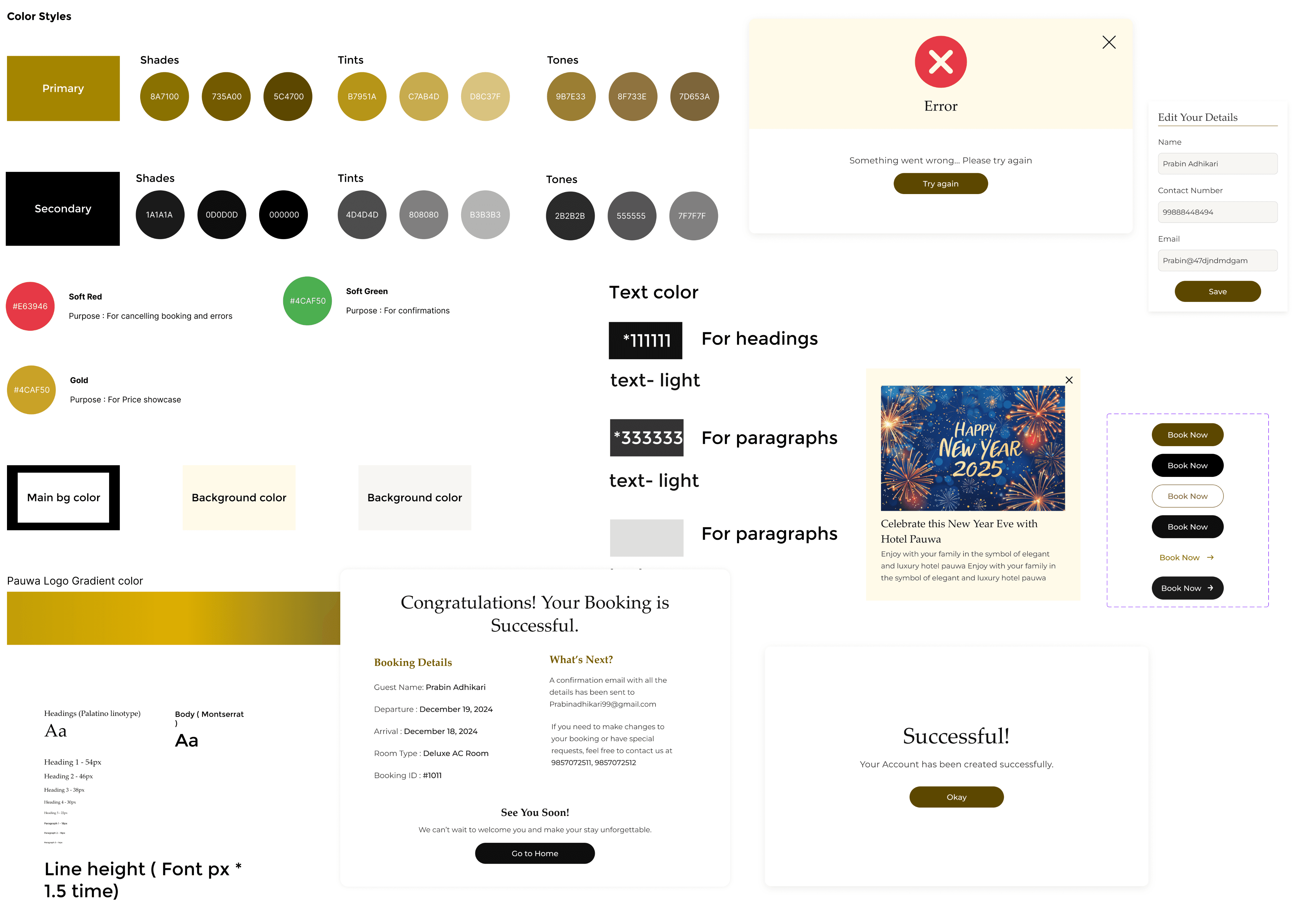
Design System
A scalable design system was built to ensure consistency across all hotel branches and to support smooth development and future expansion.
05
Final UI Design
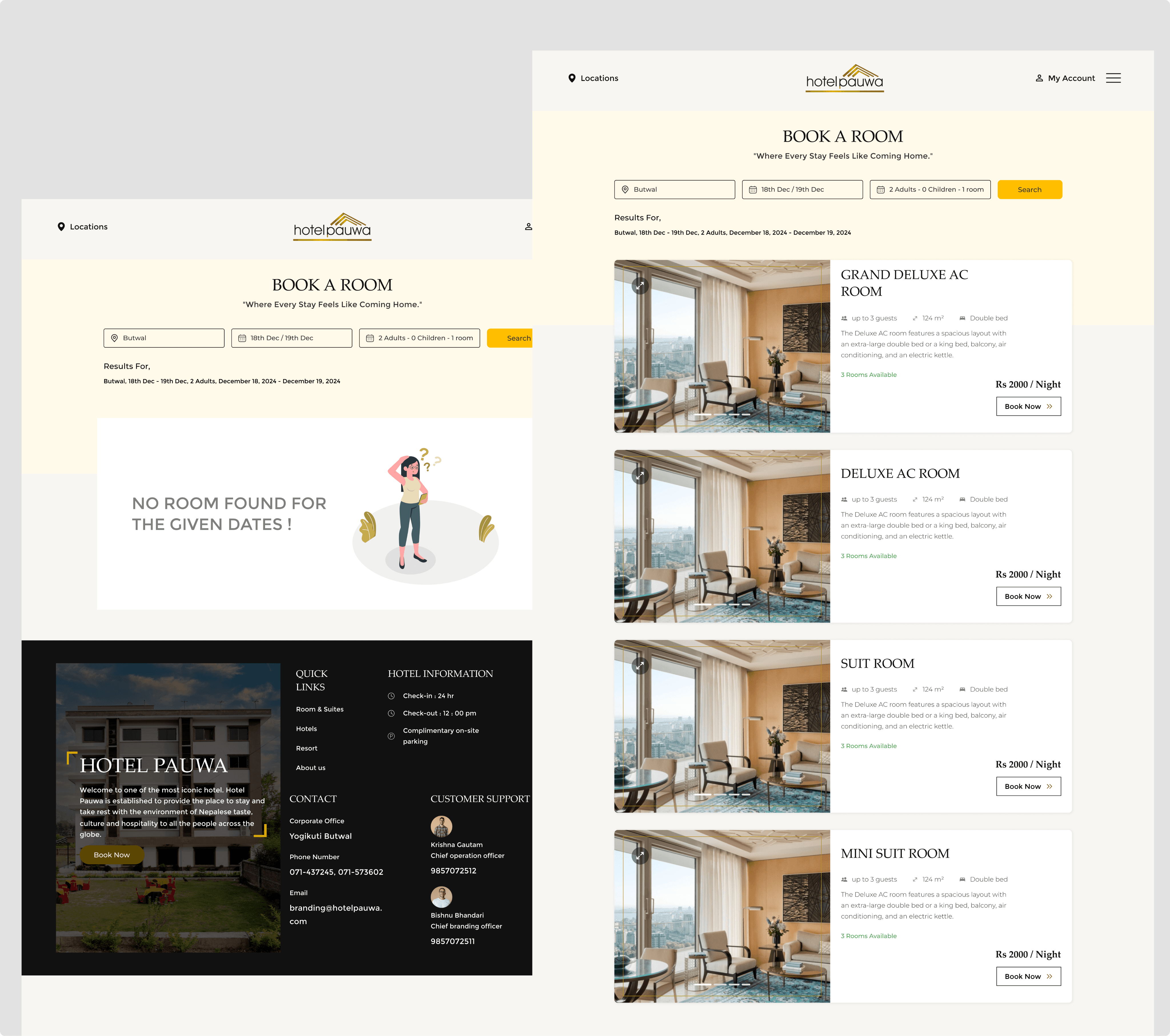
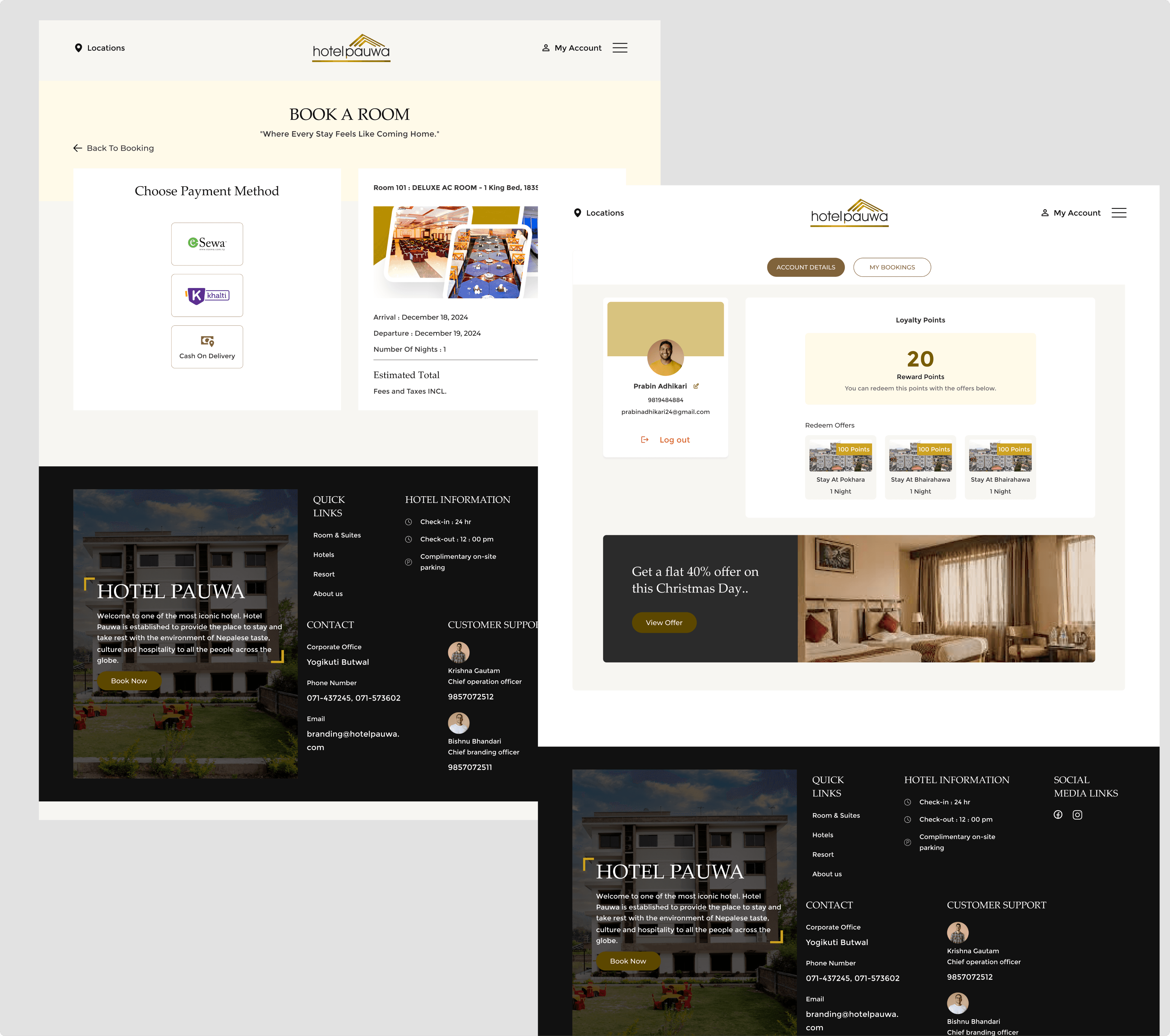
Using the design system, I designed a modern, culturally aligned UI that balanced brand consistency with branch-level individuality.
06
Testing, Feedback, Iteration
The designs were tested and reviewed with stakeholders. Feedback was incorporated through quick iterations, leading to final approval and a smooth developer handoff.
New Features
Integration of OTP Authetication
Addition Individual Branch Page
Providing Personalized User Dashboard
Integration of Online booking
Online Payment Integration
Client Satisfaction
Despite the tight schedule, the project was delivered with full commitment to all requirements, and the client was highly satisfied. Two design adjustments were made after the initial testing phase, and the final UI was fully approved. The project was successfully accepted by the client.
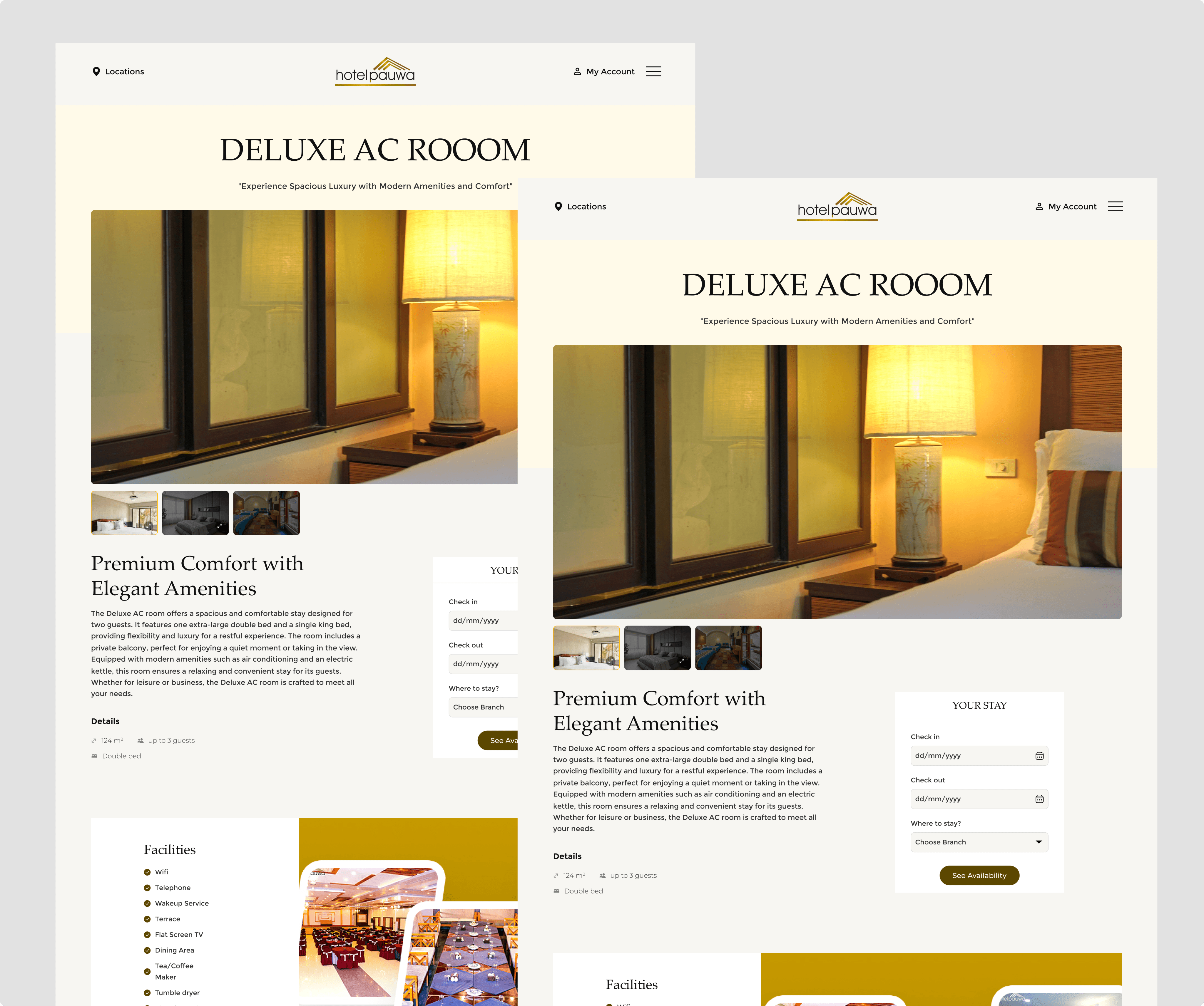
What My Design Changes?
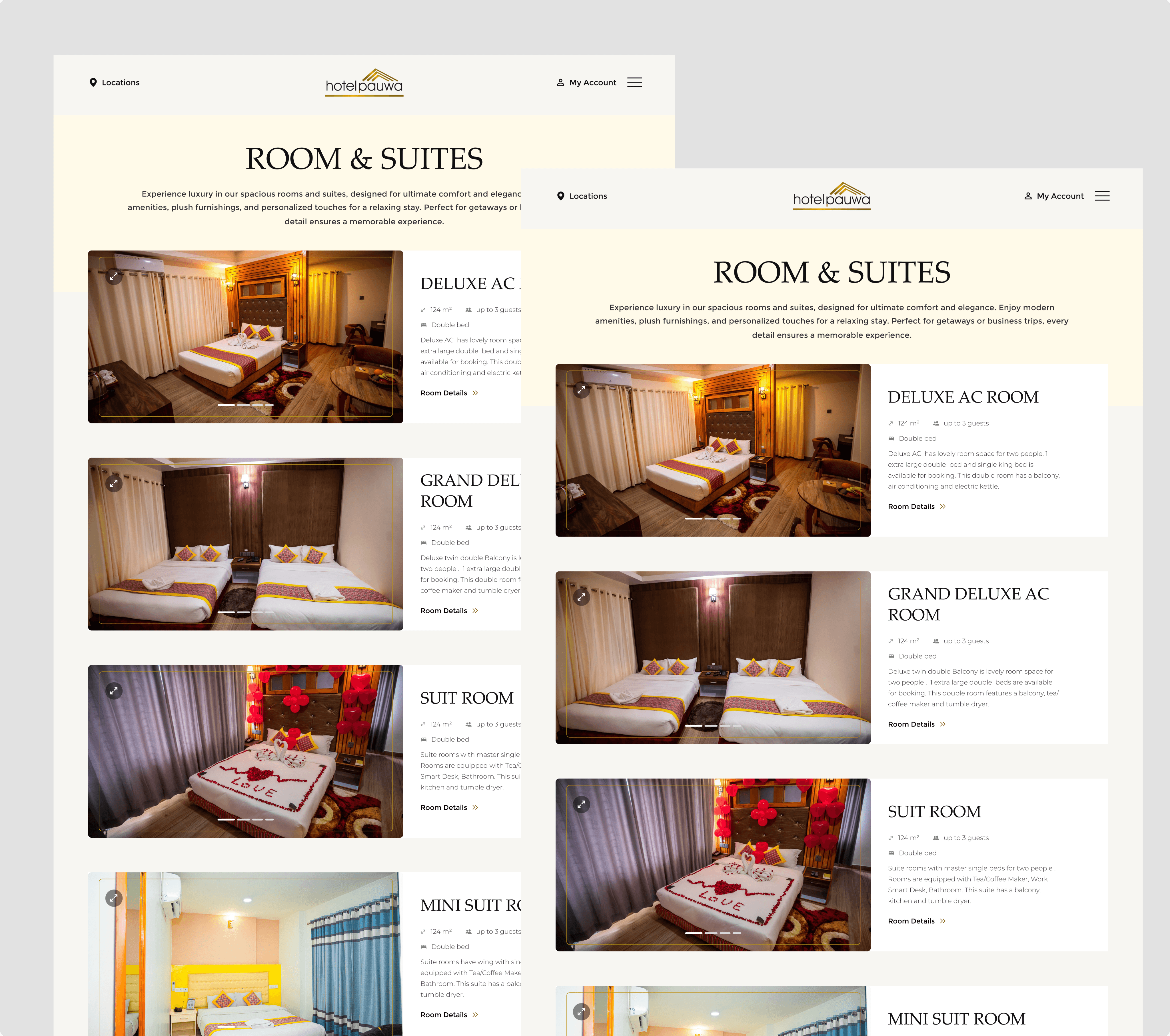
A polished New Look that excel aesthetically.
Seamless UX in Online Booking.
More conversion of customers through direct booking and easy payment module.
Engaging and retaining users through new blog and news pages.
Building trust with users through dashboards and loyalty points.
Easy room selection in any city with branch-specific guided filters.
Seamless membership with OTP authentication.
Conclusion
This was a fun project to work on, aimed at helping the client convert more customers while making the digital journey as seamless as their physical hotel experience. Just as the hotel provides a memorable stay, we focused on creating an easy and memorable digital presence. I learned a lot from this project about the hospitality sector—understanding customer behavior, their needs, and how to present a hotel effectively in the digital space.
Case Study
Hotel Pauwa Website ReDesign
About Hotel Pauwa
Hotel Pauwa is a growing chain of luxury hotels in Nepal that blends modern comfort with traditional Nepalese culture and hospitality. With multiple branches across the country—including Kathmandu, Pokhara, Butwal, and other key destinations—Hotel Pauwa offers a consistent experience rooted in warm service, cultural ambiance, and refined amenities. Positioned near significant landmarks like Pashupatinath Temple and Fewa Lake, the brand caters to both domestic and international travelers, standing out as a symbol of Nepalese taste, culture, and genuine hospitality.
Project Overview
Hotel Pauwa is a growing chain of luxury hotels in Nepal that blends modern comfort with traditional Nepalese culture and hospitality. With multiple branches across the country—including Kathmandu, Pokhara, Butwal, and other key destinations—Hotel Pauwa offers a consistent experience rooted in warm service, cultural ambiance, and refined amenities. Positioned near significant landmarks like Pashupatinath Temple and Fewa Lake, the brand caters to both domestic and international travelers, standing out as a symbol of Nepalese taste, culture, and genuine hospitality.
The Challenge
The main challenge of this redesign was to transform the existing booking process, which previously relied on a simple form input for reservations, into a seamless, user-friendly booking flow supported by a personalized dashboard. The dashboard needed to provide meaningful insights such as loyalty points, booking history, and account details, while maintaining simplicity and ease of use. Beyond functionality, the redesign aimed to elevate the overall UI, ensuring a modern, consistent, and intuitive experience. Another key goal was to make each child branch of the hotel visually distinct yet aligned with the parent brand, striking a balance between individuality and a unified identity.
Planning The Solutions
I began by structuring the redesign process, starting with the homepage, followed by the branch-specific pages, and then the booking flow. My focus was on maintaining a minimal and simple design that ensured a smooth user experience, while still preserving elements of the old design so that existing customers could easily connect with the new look. The primary commitment was to solve the booking flow challenge through a seamless integration, while also diversifying the design of each branch to give them their own identity within the unified brand. Alongside this, a user-friendly dashboard offering features such as loyalty insights and booking history, and enhanced secondary pages like Blogs and About Us. I also introduced new sections to expand the website’s functionality and engagement.
The solution was planned and executed quickly, with continuous iterations and improvements, ensuring the design evolved into a more refined and effective product.
MY Process For The Redesign
Given the tight client deadline , I needed to move quickly while maintaining quality. I began by gathering requirements and conducting focused research to draw inspiration and uncover insights that could improve the customer journey.
My process was intentionally streamlined and highly functional, ensuring that every step directly contributed to fulfilling the client’s requirements while delivering a better, user-centered experience within the short timeframe.
01
Requirements Gathering
I started by understanding the client’s goals, brand vision, and key pain points. All discussions were summarized into a single requirement document, which helped define the project scope and priorities clearly.
02
Research, Competitive Analysis
I analyzed user behavior in the hospitality space and studied competitor hotel websites to understand booking flows, UI patterns, and best practices. This helped identify opportunities to improve usability and conversions.
03
Wireframes
Wireframes were created to structure the website, define user flows, and simplify complex journeys—especially the booking process and user dashboard.
04
Design System
A scalable design system was built to ensure consistency across all hotel branches and to support smooth development and future expansion.
05
Final UI Design
Using the design system, I designed a modern, culturally aligned UI that balanced brand consistency with branch-level individuality.
06
Testing, Feedback, Iteration
The designs were tested and reviewed with stakeholders. Feedback was incorporated through quick iterations, leading to final approval and a smooth developer handoff.
New Features
Integration of OTP Authetication
Addition Individual Branch Page
Providing Personalized User Dashboard
Integration of Online booking
Online Payment Integration
Client Satisfaction
Despite the tight schedule, the project was delivered with full commitment to all requirements, and the client was highly satisfied. Two design adjustments were made after the initial testing phase, and the final UI was fully approved. The project was successfully accepted by the client.
What My Design Changes?
A polished New Look that excel aesthetically.
Seamless UX in Online Booking.
More conversion of customers through direct booking and easy payment module.
Engaging and retaining users through new blog and news pages.
Building trust with users through dashboards and loyalty points.
Easy room selection in any city with branch-specific guided filters.
Seamless membership with OTP authentication.
Conclusion
This was a fun project to work on, aimed at helping the client convert more customers while making the digital journey as seamless as their physical hotel experience. Just as the hotel provides a memorable stay, we focused on creating an easy and memorable digital presence. I learned a lot from this project about the hospitality sector—understanding customer behavior, their needs, and how to present a hotel effectively in the digital space.
New Features
Integration of OTP Authetication
Addition Individual Branch Page
Providing Personalized User Dashboard
Integration of Online booking
Online Payment Integration
Client Satisfaction
Despite the tight schedule, the project was delivered with full commitment to all requirements, and the client was highly satisfied. Two design adjustments were made after the initial testing phase, and the final UI was fully approved. The project was successfully accepted by the client.
What My Design Changes?
A polished New Look that excel aesthetically.
Seamless UX in Online Booking.
More conversion of customers through direct booking and easy payment module.
Engaging and retaining users through new blog and news pages.
Building trust with users through dashboards and loyalty points.
Easy room selection in any city with branch-specific guided filters.
Seamless membership with OTP authentication.
Conclusion
This was a fun project to work on, aimed at helping the client convert more customers while making the digital journey as seamless as their physical hotel experience. Just as the hotel provides a memorable stay, we focused on creating an easy and memorable digital presence. I learned a lot from this project about the hospitality sector—understanding customer behavior, their needs, and how to present a hotel effectively in the digital space.
The Challenge
The main challenge of this redesign was to transform the existing booking process, which previously relied on a simple form input for reservations, into a seamless, user-friendly booking flow supported by a personalized dashboard. The dashboard needed to provide meaningful insights such as loyalty points, booking history, and account details, while maintaining simplicity and ease of use. Beyond functionality, the redesign aimed to elevate the overall UI, ensuring a modern, consistent, and intuitive experience. Another key goal was to make each child branch of the hotel visually distinct yet aligned with the parent brand, striking a balance between individuality and a unified identity.
Planning The Solutions
I began by structuring the redesign process, starting with the homepage, followed by the branch-specific pages, and then the booking flow. My focus was on maintaining a minimal and simple design that ensured a smooth user experience, while still preserving elements of the old design so that existing customers could easily connect with the new look. The primary commitment was to solve the booking flow challenge through a seamless integration, while also diversifying the design of each branch to give them their own identity within the unified brand. Alongside this, a user-friendly dashboard offering features such as loyalty insights and booking history, and enhanced secondary pages like Blogs and About Us. I also introduced new sections to expand the website’s functionality and engagement.
The solution was planned and executed quickly, with continuous iterations and improvements, ensuring the design evolved into a more refined and effective product.
MY Process For The Redesign
Given the tight client deadline , I needed to move quickly while maintaining quality. I began by gathering requirements and conducting focused research to draw inspiration and uncover insights that could improve the customer journey.
My process was intentionally streamlined and highly functional, ensuring that every step directly contributed to fulfilling the client’s requirements while delivering a better, user-centered experience within the short timeframe.
01
Requirements Gathering
I started by understanding the client’s goals, brand vision, and key pain points. All discussions were summarized into a single requirement document, which helped define the project scope and priorities clearly.
02
Research, Competitive Analysis
I analyzed user behavior in the hospitality space and studied competitor hotel websites to understand booking flows, UI patterns, and best practices. This helped identify opportunities to improve usability and conversions.
03
Wireframes
Wireframes were created to structure the website, define user flows, and simplify complex journeys—especially the booking process and user dashboard.
04
Design System
A scalable design system was built to ensure consistency across all hotel branches and to support smooth development and future expansion.
05
Final UI Design
Using the design system, I designed a modern, culturally aligned UI that balanced brand consistency with branch-level individuality.
06
Testing, Feedback, Iteration
The designs were tested and reviewed with stakeholders. Feedback was incorporated through quick iterations, leading to final approval and a smooth developer handoff.
Case Study
Hotel Pauwa Website ReDesign
About Hotel Pauwa
Hotel Pauwa is a growing chain of luxury hotels in Nepal that blends modern comfort with traditional Nepalese culture and hospitality. With multiple branches across the country—including Kathmandu, Pokhara, Butwal, and other key destinations—Hotel Pauwa offers a consistent experience rooted in warm service, cultural ambiance, and refined amenities. Positioned near significant landmarks like Pashupatinath Temple and Fewa Lake, the brand caters to both domestic and international travelers, standing out as a symbol of Nepalese taste, culture, and genuine hospitality.
Project Overview
Hotel Pauwa is a growing chain of luxury hotels in Nepal that blends modern comfort with traditional Nepalese culture and hospitality. With multiple branches across the country—including Kathmandu, Pokhara, Butwal, and other key destinations—Hotel Pauwa offers a consistent experience rooted in warm service, cultural ambiance, and refined amenities. Positioned near significant landmarks like Pashupatinath Temple and Fewa Lake, the brand caters to both domestic and international travelers, standing out as a symbol of Nepalese taste, culture, and genuine hospitality.