Design System
Design System
Design System
Created and introduced a scalable design system to HMS and POS products to enhance consistency, coordination, and general user experience, as well as provide the products with a current and unified aesthetic appearance.
Created and introduced a scalable design system to HMS and POS products to enhance consistency, coordination, and general user experience, as well as provide the products with a current and unified aesthetic appearance.

About the products
About the products
Tuna Technology has flagship products: Sajha Menu POS (restaurant management software) and Tuna HMS (hotel management software). The two products have been proven to be among the most popular and successful solutions in their areas. The Sajha Menu POS provides the following features: restaurant management, KOT and BOT management, table management, billing, menu management etc.
Tuna HMS offers key hotel operations such as booking calendars, room management, group bookings, and other functionalities.Collectively, the products are known to be highly functional and reliable in the hospitality and restaurant management field.
Tuna Technology has flagship products: Sajha Menu POS (restaurant management software) and Tuna HMS (hotel management software). The two products have been proven to be among the most popular and successful solutions in their areas. The Sajha Menu POS provides the following features: restaurant management, KOT and BOT management, table management, billing, menu management etc.
Tuna HMS offers key hotel operations such as booking calendars, room management, group bookings, and other functionalities.Collectively, the products are known to be highly functional and reliable in the hospitality and restaurant management field.
The problem behind the solution
The problem behind the solution
Although both products were very powerful in terms of features and functionality, their user experience was a challenge. The most frequent criticisms were a lack of visual consistency, lack of a single product feel, overuse of text, as well as the uncontrolled use of colors that would be used to create cluttered and overwhelming interfaces.
Although both products were very powerful in terms of features and functionality, their user experience was a challenge. The most frequent criticisms were a lack of visual consistency, lack of a single product feel, overuse of text, as well as the uncontrolled use of colors that would be used to create cluttered and overwhelming interfaces.
MY Approach and solutions
MY Approach and solutions
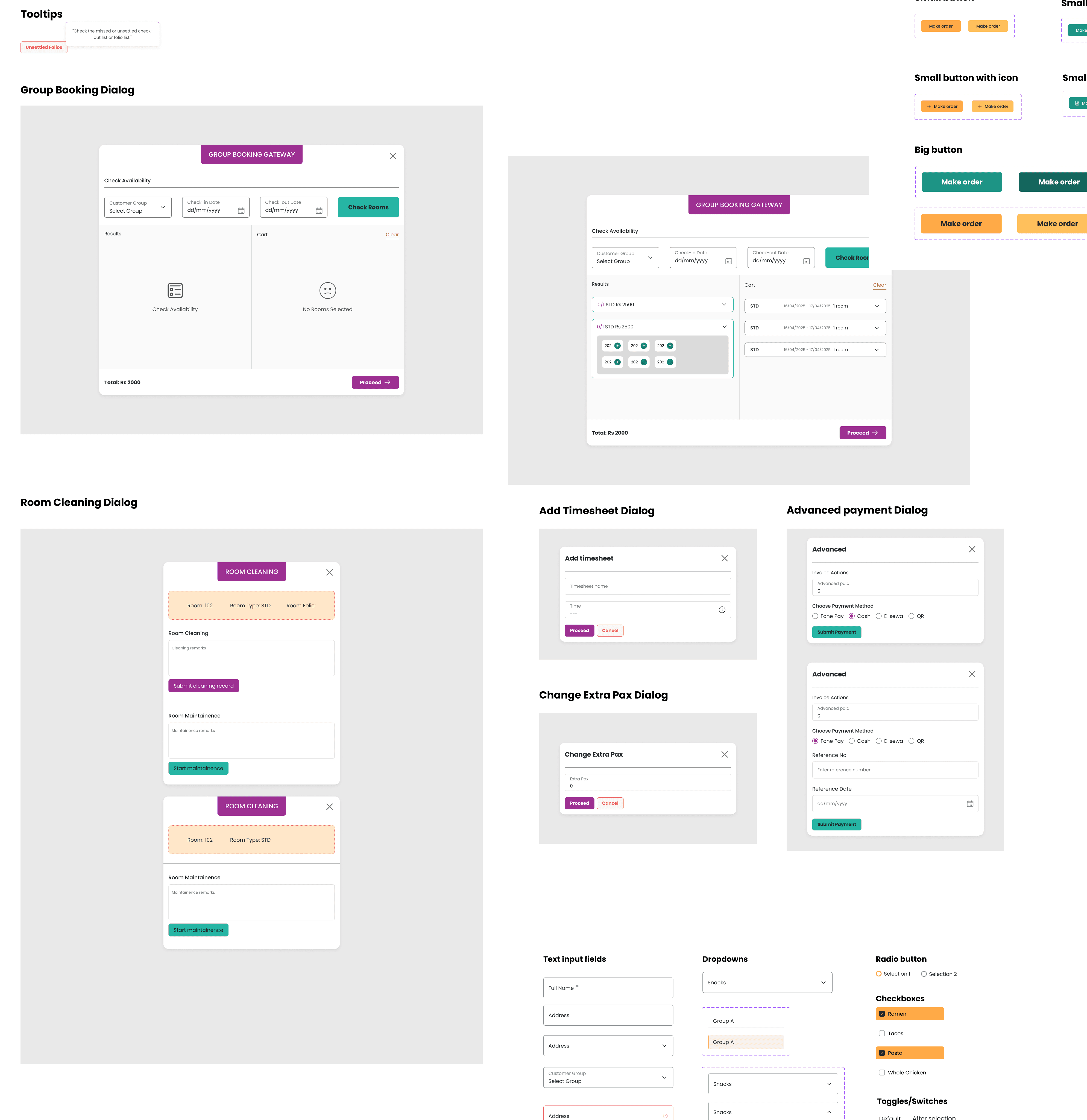
I started by reverse-engineering the existing products and capturing all UI elements, which are currently in use. Based on that, I found out the most popular components and combinations that are needed to ensure that the products become efficient and coherent.My solution was aimed at limiting the color range and focusing on the typography to improve the readability, usability, and modernity. One important approach was the gradual implementation of changes so that the existing users would not feel overwhelmed by the changes. Key improvements included:
Bringing in a new updated, contemporary visual language.
Enhancing effectiveness by effective micro-interactions.
Minimizing design noise through color and design.
Improving the design of the buttons with easier access and typeface.
Modernization of the fundamental UI components like forms, dialogues and system components.
Improving the general typography system to make it more cohesive and professional.
I started by reverse-engineering the existing products and capturing all UI elements, which are currently in use. Based on that, I found out the most popular components and combinations that are needed to ensure that the products become efficient and coherent.My solution was aimed at limiting the color range and focusing on the typography to improve the readability, usability, and modernity. One important approach was the gradual implementation of changes so that the existing users would not feel overwhelmed by the changes. Key improvements included:
Bringing in a new updated, contemporary visual language.
Enhancing effectiveness by effective micro-interactions.
Minimizing design noise through color and design.
Improving the design of the buttons with easier access and typeface.
Modernization of the fundamental UI components like forms, dialogues and system components.
Improving the general typography system to make it more cohesive and professional.
Effect and results
Effect and results
The transformations created a positive influence in both products. The platforms were more intuitive and more modern almost a clean sheet yet also familiar to existing users with a refreshed visual identity and better accessibility.The design system was used to streamline the products, enhance usability and provide a solid basis of scalability and consistency in the future.
The transformations created a positive influence in both products. The platforms were more intuitive and more modern almost a clean sheet yet also familiar to existing users with a refreshed visual identity and better accessibility.The design system was used to streamline the products, enhance usability and provide a solid basis of scalability and consistency in the future.